

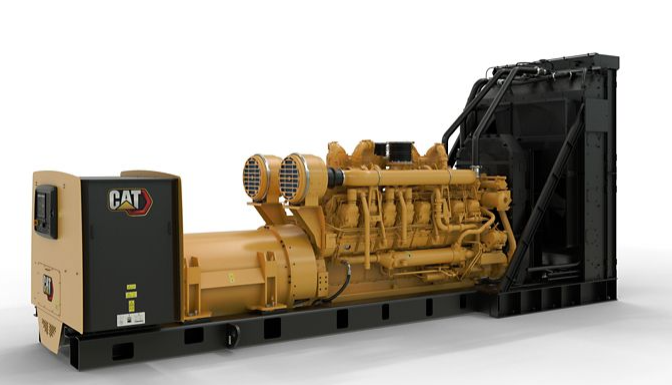
The G3520K is a newer, high-performance evolution of the G3520H, offering faster load
response, higher efficiency, and better fuel flexibility—especially for CHP and
demanding environments.
Here’s a detailed breakdown of how they differ:
Performance & Efficiency
• G3520K:
Delivers up to 2.5 MW of continuous power.
Reaches full load 40% faster than the G3520H.
Offers up to 90% overall efficiency in CHP applications.
Enhanced transient load handling and grid sync in 4.5 minutes.
• G3520H:
Also rated for 2.5 MW, but with slower ramp-up and lower transient
response.
Lower overall efficiency, especially in heat recovery scenarios.
Fuel Flexibility
• G3520K:
Runs on natural gas, propane, and future support for biogas, coal mine
methane, and up to 25% hydrogen blends.
Open chamber combustion system for broader fuel compatibility.
• G3520H:
Primarily optimized for pipeline natural gas.
Less adaptable to alternative fuels or hydrogen blends.
AVAILABILITY: Current availability of 15-G3520K Models
Summary Table:
—————————-
Feature G3520K G3520H
Power Output 2.5 MW 2.5 MW
Load Response 40% faster, 4.5 min to full load Slower, ~6 min to full load
Efficiency (CHP) Up to 90% Lower
Fuel Compatibility NG, propane, biogas, H2 blends NG only
Controls ECS + AMP, remote diagnostics Basic controls
Site Conditions High altitude & temp ready May require derating.
Controls & Diagnostics
• G3520K:
Integrated with Cat Energy Control System (ECS) and Cat AMP for
predictive analytics, remote monitoring, and DERMS integration.
Advanced diagnostics and asset monitoring built-in.
• G3520H:
Uses older-generation control systems with limited remote diagnostics.
Less integration with modern microgrid or utility programs.
Environmental & Site Adaptability
• G3520K:
Performs reliably in high altitudes and extreme temperatures without
derating.
Ideal for off-grid, urban, or utility-driven demand response.
• G3520H:
Requires derating in harsh environments.
Less suited for microgrid or peak shaving applications.
What Is CHP?
CHP (Combined Heat and Power), also known as cogeneration, is a highly efficient energy system that simultaneously produces electricity and useful thermal energy from a single fuel source. It’s widely used in hospitals, industrial plants, universities,
and microgrids to reduce energy costs and improve reliability.
• CHP systems generate electricity and capture the heat that would otherwise be wasted during power generation.
• This captured heat is repurposed for space heating, water heating, steam production, or cooling via absorption chillers.
• CHP can achieve efficiencies of over 80%, compared to ~50% for separate heat and power systems.
How CHP Works
There are two main types of CHP systems:
• Reciprocating Engine or Combustion Turbine Systems: Burn natural gas, biogas, or other fuels to generate electricity. Heat recovery units capture exhaust heat for thermal use.
• Steam Turbine Systems: Use boilers to produce steam that drives turbines for electricity. The leftover steam is used for heating or industrial processes.
Where CHP Is Being Used
CHP is deployed across a wide range of sectors:
• Hospitals and Healthcare Facilities: Ensures resilient power during grid outages
and supports critical thermal loads like sterilization and HVAC.
• Universities and Campuses: Powers buildings while supplying steam or hot water
for heating.
• Industrial Plants: Supports process heating, drying, and cooling while reducing
energy costs.
• District Energy Systems: Supplies electricity and heat to multiple buildings from a
central plant.
• Microgrids and Utilities: Enhances grid stability and supports peak shaving or
demand response programs.
Benefits of CHP
• Energy Efficiency: Reduces fuel consumption and greenhouse gas emissions.
• Cost Savings: Lowers utility bills by using fuel more effectively.
• Resilience: Provides 24/7 power during outages, especially critical for hospitals and
data centers.
• Fuel Flexibility: Can run on natural gas, biogas, propane, or hydrogen blends.
• Environmental Compliance: Meets strict emissions standards without needing
aftertreatment.
Blog
Recent Blog Posts
No Results Found
The page you requested could not be found. Try refining your search, or use the navigation above to locate the post.